Sanatan Dharma, also known as Hinduism, is the world’s most ancient and timeless spiritual tradition. It is not confined to rituals or religious identity; rather, it is a complete philosophy of life based on truth, balance, self-realization, and harmony with nature. The wisdom of Sanatan Dharma flows from sacred scriptures such as the Vedas, Upanishads, Bhagavad Gita, and Puranas, which guide humanity toward inner awakening.
Among all divine forms in Sanatan Dharma, Lord Shiva holds a unique place. He is not only worshipped as a god but revered as a consciousness, a teacher, and a way of life. Shiva represents stillness amidst chaos, simplicity amidst complexity, and balance amidst extremes.
Why Lord Shiva Is Closest to the Common Human Being
Lord Shiva is lovingly called Bholenath, because He is innocent, compassionate, and easily pleased. Unlike other deities who are worshipped with elaborate rituals, Shiva accepts the simplest offerings:
- A pot of pure water
- A single Bel Patra
- A sincere and devoted heart
This teaches humanity a powerful lesson: God does not look at wealth or display, but intention and purity.
Shiva is also known as Mahadev (the Supreme Consciousness), Ashutosh (the one who grants quickly), and Kalyankari (the giver of welfare). Through Shiva, one learns that spiritual growth does not require abandonment of life but understanding life deeply.
The True Essence of Shiva Bhakti
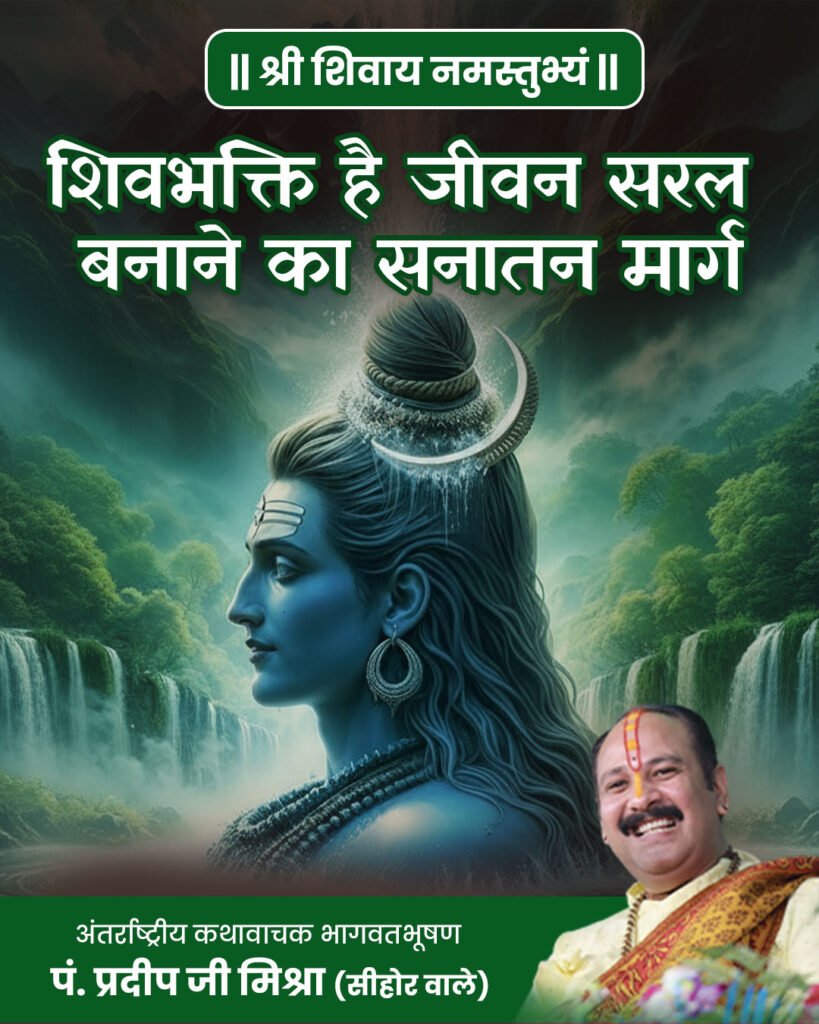
The essence of Shiva devotion lies in simplicity, truthfulness, and acceptance. As often emphasized in spiritual discourses:
“To attain Shiva, one does not need vast knowledge—only a true and sincere heart.”
Shiva bhakti does not demand perfection; it demands honesty. Shiva accepts devotees as they are, not as they pretend to be. This is why people from all walks of life—kings, ascetics, householders, and even outcasts—have found refuge in Shiva.
Shiva’s life teaches us balance:
- He is a householder, yet a renunciate
- He lives on Mount Kailash, yet resides in cremation grounds
- He embodies creation and destruction, both equally sacred
This balance reflects the truth of human life—joy and sorrow, gain and loss, birth and death.
Acceptance: The Deepest Teaching of Lord Shiva
One of the greatest teachings of Shiva is acceptance. Acceptance does not mean weakness; it means understanding reality without resistance.
“One who understands Shiva learns to accept every situation in life.”
Shiva teaches us that:
- Pain is temporary
- Change is inevitable
- Attachment is the root of suffering
By accepting life as it is, a devotee becomes mentally strong and emotionally stable.
Shiva Devotion Is Emotion, Not External Show
Lord Shiva does not desire luxury, ornaments, or grand offerings. He is adorned with:
- Ash (symbol of impermanence)
- Snakes (symbol of fearlessness)
- Rudraksha (symbol of awareness)
This symbolism teaches that true devotion is internal, not external.
“It is not the water offered to Shiva that He accepts, but the faith mixed within it.”
In today’s world of social media and display-based spirituality, Shiva bhakti reminds us that real devotion happens silently within the heart.
Shiva Bhakti and Mental Peace in Modern Life
Modern life is dominated by:
- Stress
- Anxiety
- Fear of failure
- Constant comparison
Shiva is the Lord of Meditation (Adiyogi). His meditative posture teaches us to pause, breathe, and look inward. Shiva bhakti encourages:
- Stillness of mind
- Control over emotions
- Awareness of the present moment
Shiva teaches us that life is not a race. Sometimes, stopping is more powerful than running.
Shiva Devotion Beyond Rituals: Service, Morality, and Nature
True Shiva devotion extends beyond temples and rituals. It reflects in:
- Compassion toward others
- Ethical living
- Respect for nature
“True devotion to Shiva is that which includes service, moral conduct, and sensitivity toward nature.”
This philosophy inspires movements like Green Shivratri, tree plantation drives, and environmental conservation. Shiva is deeply connected with nature:
- Ganga flows from His hair
- Serpents adorn His body
- Ash reminds us of earth
- Rudraksha comes from trees
To protect nature is to worship Shiva.
Practical Life Lessons from Shiva Bhakti
Shiva bhakti transforms daily life by teaching:
- Contentment in simplicity
- Patience during hardship
- Humility during success
- Detachment from ego
- Courage to face truth
These qualities make life lighter, calmer, and more meaningful.
Shiva Bhakti: A Path for Everyone
Shiva devotion is not limited by:
- Age
- Gender
- Wealth
- Social status
Anyone can walk the path of Shiva bhakti by living with honesty, compassion, and balance. You do not need to leave the world; you need to understand it correctly.
Words of Wisdom to Reflect Upon
“If you want to make life simple, learn to become calm, stable, and compassionate like Shiva. Because Shiva devotion is not just believing in Shiva—it is living like Shiva.”
Conclusion: Living Shiva, Not Just Worshipping Shiva
Shiva devotion is the eternal Sanatan path that simplifies life, stabilizes emotions, purifies thoughts, and aligns humans with nature. In a world filled with noise and chaos, Shiva teaches silence, balance, and truth.
To walk the path of Shiva bhakti is to:
- Live consciously
- Accept life fully
- Serve selflessly
- Protect nature
- Remain humble
Shiva bhakti is not an escape from life—it is the art of living life rightly.