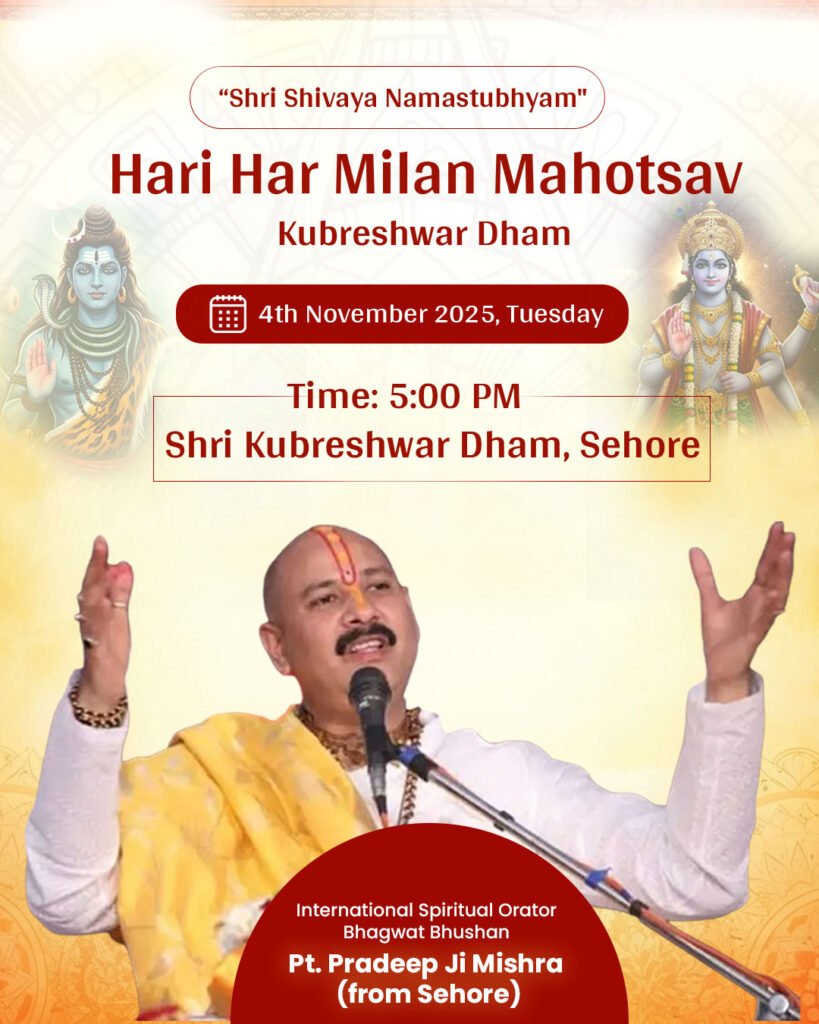
The saying “One tree is equal to a hundred sons” is deeply rooted in Indian wisdom. Just as parents nurture a child from birth and the child later supports them, a tree—when planted and cared for—returns life in many forms. It gives fruits, oxygen, food, shade, and sustains the environment.
This is why a tree is considered equal to a hundred sons. To give birth to such life-giving “sons,” the idea of Green Shivratri (Harit Shivratri) was established.
One Tree, a Hundred Sons
In Sanatan culture, Lord Shiva is not merely a deity but the protector of nature. He resides on Mount Kailash, adorns sacred ash, and is pleased with Bel Patra, Datura, and Aak—elements that come directly from nature.
Mahashivratri is the sacred night of devotion to Lord Shiva. When this devotion is connected with greenery, tree plantation, and environmental protection, it transforms into Green Shivratri.
Pandit Pradeep Mishra Ji often says:
“The one who planted a tree has saved the future. One tree gives fruits equal to a hundred sons.”
This statement is not merely spiritual guidance—it is a timeless truth.
The Unbreakable Bond Between Shiva and Trees
Bel Patra is always offered to the Shivling because the Bel tree is life-sustaining. Lord Shiva is known as Pashupatinath—the lord of animals, birds, trees, and all living beings.
Planting a tree is, in essence, an act of serving Lord Shiva.
Pandit Pradeep Mishra Ji explains:
“Offering water to Lord Shiva becomes meaningful only when we also plant trees that help conserve water.”
Why Is One Tree Equal to a Hundred Sons?
Because while a son supports one family, a tree supports generations:
- Provides pure oxygen to generations
- Helps retain and conserve groundwater
- Gives shelter to birds and animals
- Creates employment for farmers
- Sustains human life and ecosystems
Remedy Suggested by Pandit Ji
If fever does not subside, Pandit Pradeep Mishra Ji suggests a simple spiritual remedy:
👉 Watch here:
https://www.youtube.com/shorts/idc-Ry7Nvc4
Harit Shivratri vs Mahashivratri
Both Mahashivratri and Harit Shivratri (Green Shivratri) are dedicated to Lord Shiva, yet they differ in purpose and practice.
Mahashivratri
- Celebrated on Krishna Chaturdashi of the Phalguna month
- The most sacred night dedicated to Lord Shiva
- Includes fasting, night vigil, Abhishek, meditation, and worship
- Symbolizes spiritual awakening, destruction of ignorance, and the union of Shiva and Shakti
Harit Shivratri (Green Shivratri)
- Focuses on environmental protection and greenery
- Encourages planting plants, especially Bel Patra saplings
- Represents nature worship and ecological responsibility
- Connects devotion with practical environmental action
Mahashivratri uplifts the soul, while Green Shivratri heals the Earth.
Together, they reflect Shiva as cosmic consciousness and guardian of nature.
The Pledge of Green Shivratri
Green Shivratri is not merely a ritual—it is a commitment:
- To plant at least one sapling
- To nurture it like one’s own child
- To protect nature as Shiva’s sacred offering
Freedom from Family Conflicts
Pandit Pradeep Mishra Ji also shares remedies for resolving family conflicts.
👉 Watch here:
https://www.youtube.com/shorts/gw6DM6sUdMQ
Message from Pandit Pradeep Mishra Ji
“If you plant even one sapling on Shivratri, understand that Shiva has filled your life with greenery.”
At a time when the Earth is facing rising temperatures, pollution, and water scarcity, true devotion to Lord Shiva lies in planting trees.
A plant outside a temple, a Tulsi plant in the courtyard, or a shade-giving tree along the roadside—this is the greatest form of worship today.
Conclusion: Offer a Tree to Shiva
This Green Shivratri, let us not only seek blessings from Lord Shiva—
Let us offer Him a tree.
Because:
- One tree is equal to a hundred sons
- And the one who plants a tree is the true devotee of Lord Shiva