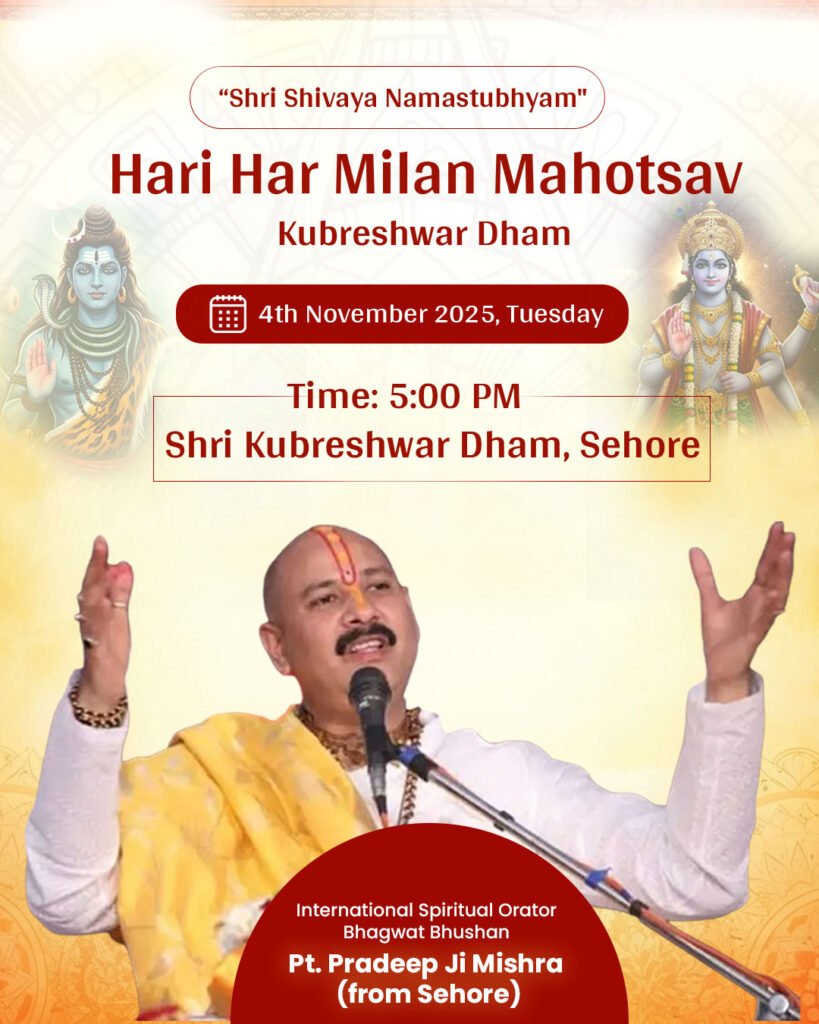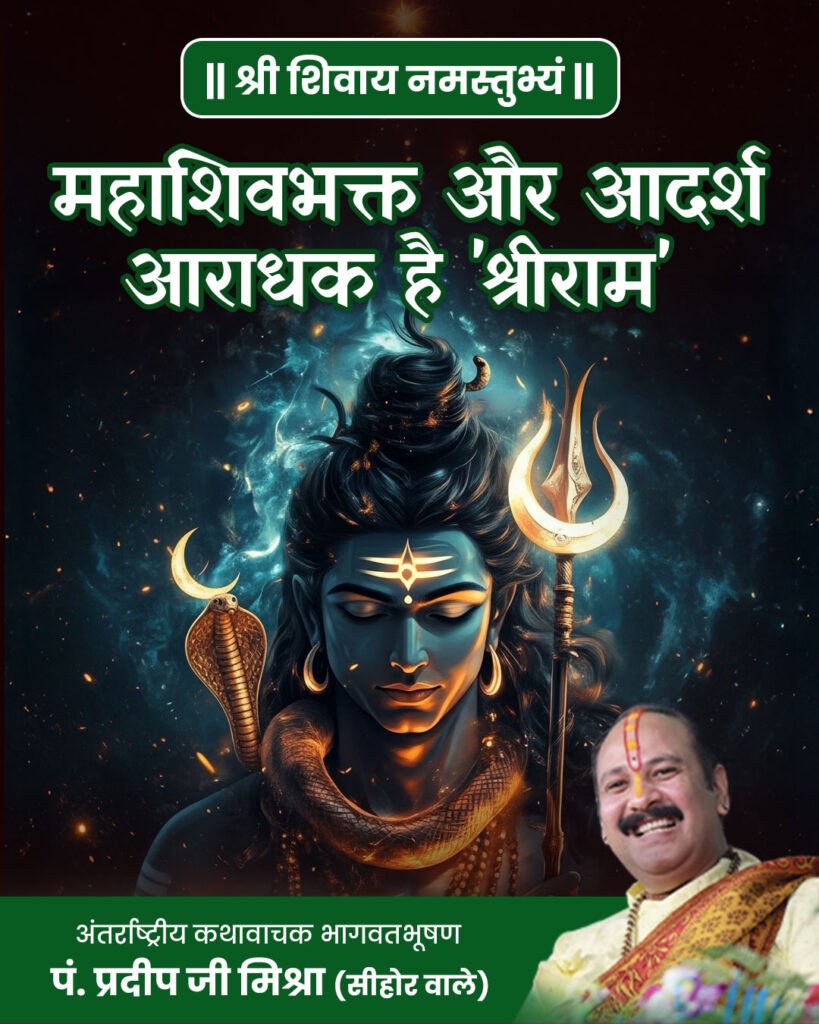
“The devotees of Bholenath become as innocent and pure as Bholenath Himself.”
This is not just a simple statement — it is the essence of Shiva Bhakti. Lord Shiva, who is the embodiment of simplicity and compassion, makes His devotees calm, pure, and filled with inner bliss. Shiva devotion is not merely a ritual; it is a state of consciousness where the difference between the devotee and the Divine dissolves.
From ancient times to the present, countless devotees have enriched the Shaiva tradition through devotion, literature, penance, and surrender. Among them, one of the most profound examples is Bhagwan Shri Krishna’s deep devotion to Lord Shiva, which beautifully expresses the unity of the Vaishnav and Shaiva paths.
The Spiritual Harmony of Vaishnav and Shaiva Traditions
In Sanatan Dharma, Vaishnav and Shaiva traditions are often seen as different, yet the scriptures and Puranas reveal that they are complementary to each other. The most beautiful example of this unity is Shri Krishna — the incarnation of Lord Vishnu — worshipping Lord Shiva with complete devotion and reverence.
This divine tradition, where one form of God worships another, teaches us that:
Devotion and respect are the highest forms of Dharma.
Krishna Establishing the Shivling at Prabhas (Somnath)
According to the Puranas and the Mahabharata tradition, Shri Krishna performed intense penance to please Lord Shiva at Prabhas Kshetra for the welfare of his son Samba, who was suffering from a severe disease. He established a Shivling there and worshipped Mahadev with deep austerity.
Pleased with his devotion, Lord Shiva:
- Cured Samba’s illness
- Granted His divine presence at that sacred place
Today, that holy site is revered as the Somnath Jyotirlinga.
🎥 The power of Mahadev to remove sorrow
https://www.youtube.com/shorts/-Ob8ZMQ0uLw
Shiva Worship Before Auspicious Events
Aniruddha’s Marriage
The Bhagavata Purana mentions that Shri Krishna worshipped Lord Shiva before the marriage of his grandson Aniruddha so that the ceremony would be completed without obstacles. This reflects the Sanatan tradition of remembering Shiva before every auspicious beginning.
Rukmini Vivah
In some sacred narrations, Shri Krishna prayed to Lord Shiva for strength and guidance before bringing Rukmini safely to Dwarka. With Shiva’s grace, the divine union was completed successfully.
The Message of the Bhagavad Gita and Shiva Tattva
The path of karma, knowledge, devotion, detachment, meditation, and equanimity taught by Shri Krishna in the Bhagavad Gita is the very essence of Shiva Tattva. The life philosophy of Shiva and the teachings of Krishna both lead toward the same ultimate truth.
Govardhan and the Hidden Worship of Shiva
During the Govardhan Leela, Shri Krishna lifted the Govardhan mountain to protect the people of Gokul. According to sacred beliefs, Govardhan is considered a form of Shiva, and thus Krishna’s act becomes an indirect worship of Mahadev — a beautiful symbol of divine unity.
Shiva’s Presence in the Rasleela
The Devi Bhagavata Purana narrates that Lord Shiva wished to witness Krishna’s Rasleela. Krishna lovingly allowed Him to enter in the form of a Gopi. This divine episode shows the intimacy and sweetness of the relationship between the two — where God becomes the devotee and the devotee becomes God.
The Universal Spiritual Message
These sacred incidents give us a powerful message:
- God is one, though His names and forms are many
- True devotion has no division
- Respect for another’s chosen deity is the highest spirituality
At a time when people divide themselves in the name of religion, Shri Krishna’s devotion to Shiva teaches:
Harmony, tolerance, unity, and universal love.
Teachings from Krishna’s Shiva Bhakti
- There is no superiority or inferiority in devotion
- Ego has no place in Bhakti
- Surrender is the highest path
- All paths lead to the same ultimate goal — Moksha and Lok Kalyan
When Yogeshwar Krishna worships Shiva, it becomes the greatest lesson in humility for humanity.
The Wisdom of Pandit Pradeep Mishra Ji
Pandit Pradeep Mishra Ji explains:
“The path of Shiva Bhakti is as simple as Bholenath Himself. Shiva seeks emotion, not offerings.”
He emphasizes two profound truths from Krishna’s Shiva devotion:
- True devotion has no hierarchy
- God is one, though His forms are many
The establishment of the Shivling at Somnath by Shri Krishna teaches that in difficult times, spiritual refuge is the only real support.
He also reminds us of the scriptural truth:
“Shivaya Vishnu Roopaya, Shiva Roopaya Vishnave.”
(Shiva is the form of Vishnu, and Vishnu is the form of Shiva.)
🎥 Pandit Mishra Ji’s thoughts on Shri Krishna
https://www.youtube.com/shorts/PLgYvj9DFW0
Conclusion: The Divine Oneness of Shiva and Krishna
Shri Krishna’s devotion to Lord Shiva is not just a religious narrative — it is the living declaration of the unity of Sanatan Dharma. It teaches us that devotion is beyond sects and forms.
When Krishna worships Shiva and Shiva longs to witness Krishna’s Rasleela, it becomes clear:
There is no difference in the Divine — only different expressions of the same supreme truth.
This realization makes a devotee humble, loving, and spiritually awakened.