Hindu Puranas contain many powerful stories that symbolize human ambition, the misuse of power, and ultimately the victory of righteousness. The story of Bhasmasura and Lord Shiva is one such profound and instructive narrative. It teaches us that tapasya (austerity) holds immense power, but its outcome depends on the intention and wisdom behind it.
This is not just the story of an asura — it is a spiritual mirror for every seeker.
Who Was Bhasmasura?
Bhasmasura was a powerful demon and a great ascetic who desired to become stronger than the gods. He had heard that Lord Shiva is Ashutosh — the one who becomes pleased very quickly with sincere penance.
With this belief, he undertook a severe vow to please Mahadev.
After years of intense austerity, Lord Shiva appeared before him and asked him to request a boon.
The Power of His Penance
According to the Puranas, Bhasmasura performed extreme tapasya:
- Standing on one leg for years
- Giving up food and water
- Constantly chanting the name of Shiva
Such was the intensity of his penance that the three worlds trembled. Pleased by his devotion, Lord Shiva granted him a boon.
But the boon he asked for revealed his inner intention:
“Let anyone on whose head I place my hand turn instantly into ashes.”
This shows that while his tapasya was intense, his intention was driven by ambition and ego.
Misuse of the Boon
As soon as he received the boon, arrogance overtook him. To test his power, he even tried to place his hand on Lord Shiva Himself.
This moment symbolizes a timeless truth:
Power without wisdom becomes self-destructive.
Realizing the danger, Lord Vishnu took the form of Mohini, enchanted Bhasmasura with divine beauty, and began to dance. While imitating her dance movements, Bhasmasura placed his own hand on his head — and was reduced to ashes.
🎥 Know the wisdom of Shiv Purana and remove sorrow from life
https://www.youtube.com/shorts/U2FTtRZ7B3s
The Spiritual Lessons from the Story
The story of Bhasmasura teaches:
- Responsibility of power: Strength without wisdom leads to destruction
- The end of ego: Pride always destroys the one who holds it
- Divine justice: Dharma ultimately triumphs over adharma
- Limits of boons: No blessing is greater than moral conduct
- True meaning of tapasya: Austerity must purify the heart, not inflate the ego
- Compassion of Shiva: Shiva grants quickly, but the result depends on the seeker’s intention
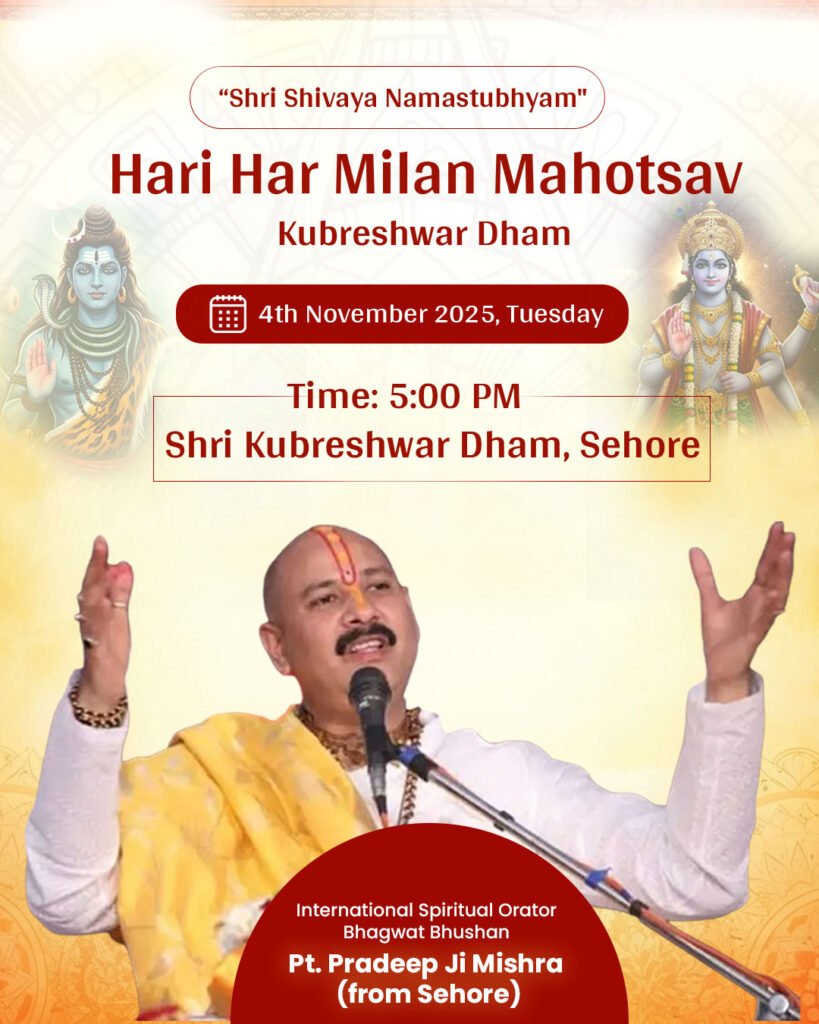
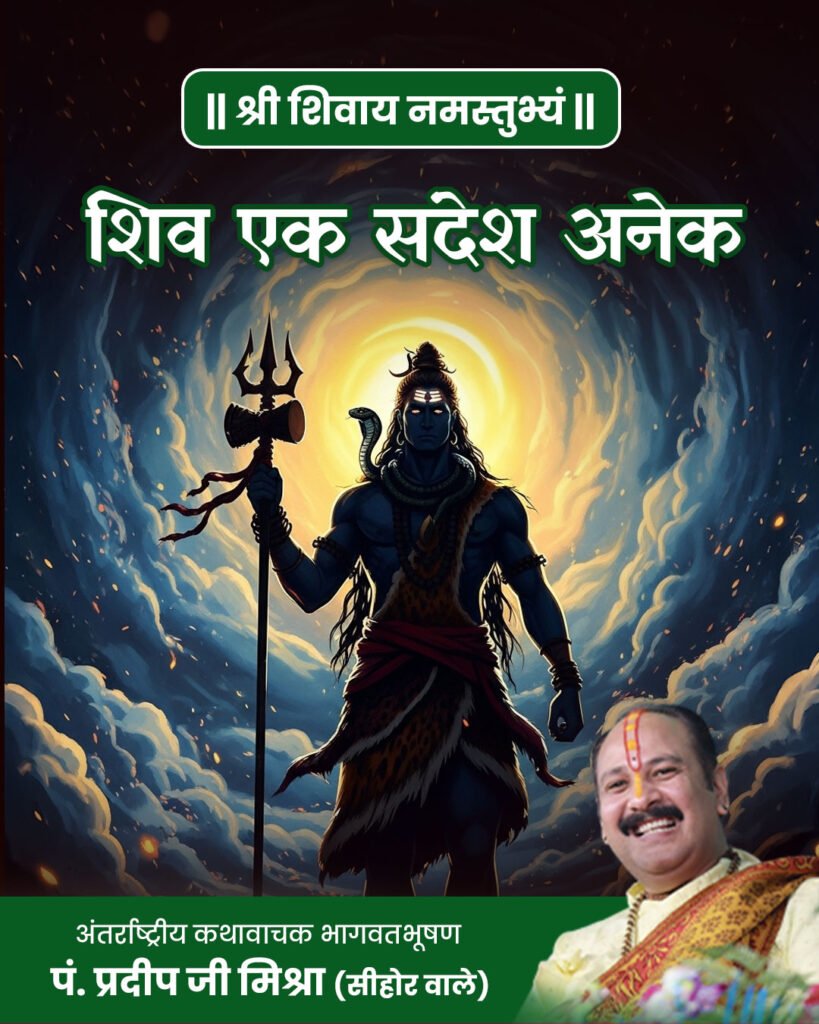
The Interpretation of Pandit Pradeep Mishra Ji
Pandit Ji explains this story as a warning for every devotee:
“Tapasya is not meant to gain power — it is meant to purify oneself.”
He emphasizes:
- Shiva looks at the emotion, but the outcome is decided by karma
- Bhasmasura’s devotion was intense, but his intention was not pure
- When ego enters devotion, destruction begins
He further teaches:
- Humility is the greatest ornament of Shiva Bhakti
- One should ask for wisdom before asking for power
- The true result of Shiva’s grace is peace, restraint, and right understanding — not display of strength
🎥 Learn to bow in life and you will never be troubled
https://www.youtube.com/shorts/T8qbxCvLeQg
Relevance in the Modern World
In today’s context, the story of Bhasmasura is deeply symbolic.
Modern forms of power include:
- Technology
- Political authority
- Economic strength
- Scientific advancement
Without ethics and self-control, these can become destructive — just like Bhasmasura’s boon.
This story reminds us:
Before asking for power, ask for wisdom.
The Inner Meaning of the Story
Bhasmasura represents:
- The uncontrolled mind
- Ego-driven ambition
- Desire for domination
Shiva represents:
- Divine grace
- Infinite compassion
Mohini represents:
- Maya (illusion)
- The self-created trap of ego
Thus, the story is actually about the self-destruction of ego.
The Final Message
True Shiva Bhakti is not about gaining supernatural power — it is about:
- Inner purification
- Humility
- Self-control
- Welfare of all beings
Pandit Pradeep Mishra Ji beautifully summarizes:
“The essence of Shiva Bhakti is not power — it is peace, wisdom, and surrender.”
The moment the word “I” enters devotion, the downfall begins.
Conclusion
The story of Bhasmasura is not merely a mythological event — it is a timeless spiritual lesson.
It teaches us:
- Ask not for power, but for right understanding
- Practice devotion not for dominance, but for transformation
- Walk the path of Shiva through humility, not ego
Because the path to Shiva does not pass through ambition —
it passes through self-purification.