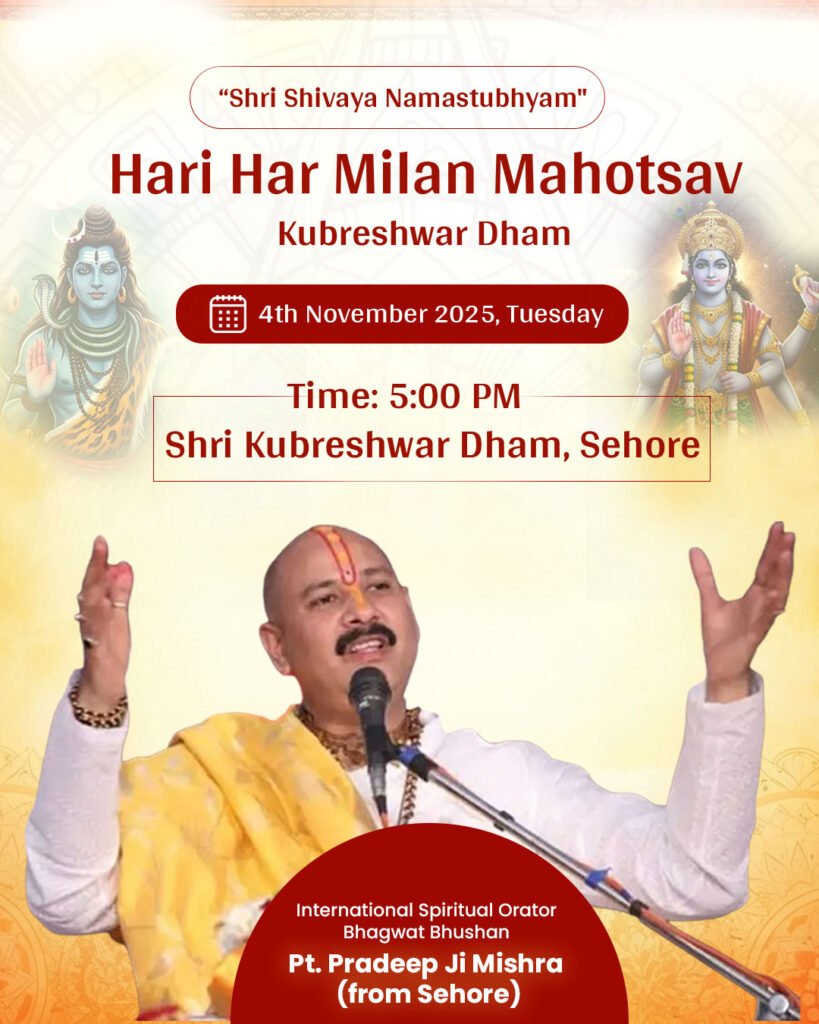
This is not just a saying, but the very essence of Shiva-bhakti. Lord Shiva, who is gentle and spontaneous by nature, transforms his devotees into embodiments of simplicity, purity, and inner bliss. Shiva-bhakti is not merely a ritual; it is a state of consciousness where the distinction between devotee and the Divine dissolves.
From the Puranic age to the historical, medieval, and present times, there have been countless devotees who enriched the Shaiva tradition through devotion, literature, penance, and surrender.
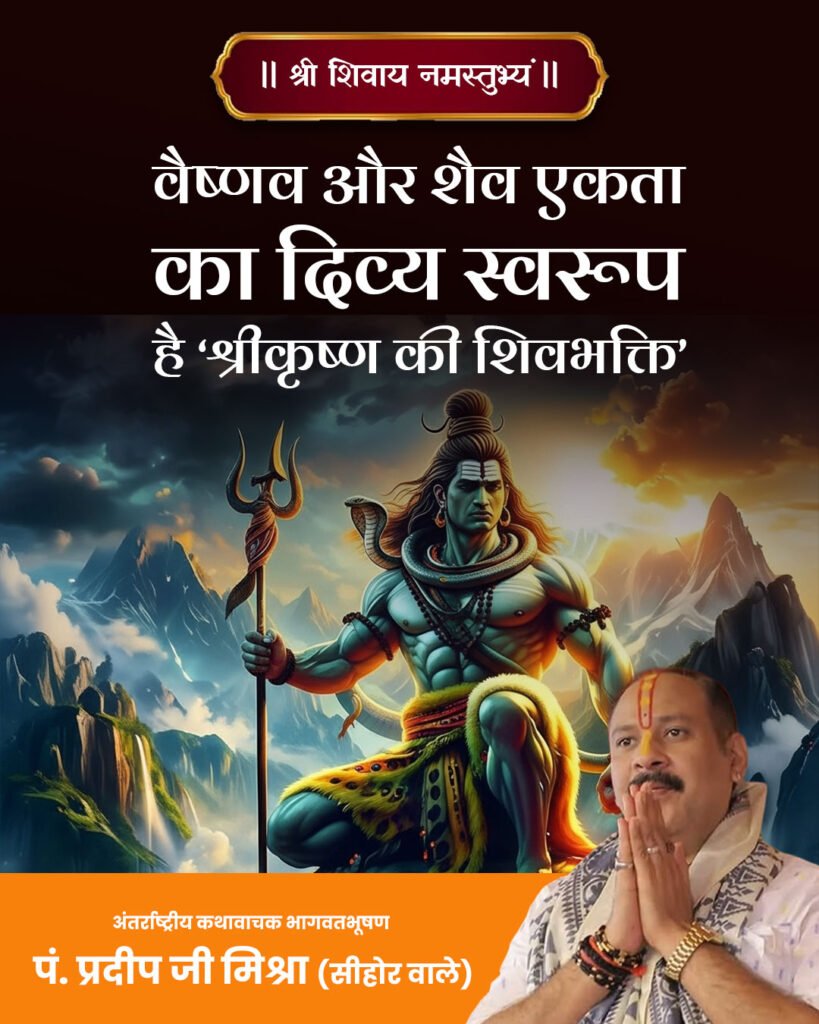
Shri Krishna’s Devotion to Lord Shiva
In the Sanatan tradition of India, Vaishnava and Shaiva paths are often seen as separate, but the scriptures and Puranas tell us that these two streams are actually complementary.
The most beautiful example of this is Lord Shri Krishna’s deep devotion to Lord Shiva.
Shri Krishna — the flute-bearer, the Lord of Raas, and an incarnation of Vishnu — was himself a great devotee of Mahadev. He worshipped Lord Shiva and offered him reverence and respect.
In Hindu tradition, even gods worship one another, conveying the message that devotion and reverence are the highest dharma.
A famous episode from the Mahabharata — and the sacred Somnath Temple itself — stands as a symbol of Krishna’s devotion to Shiva, when he established a holy Shivling.
Krishna Established a Shivling
The Puranas describe that Lord Shri Krishna regarded Shiva as:
- Ashutosh — the one who is easily pleased
- Bhaktavatsal — the one who loves his devotees
Krishna believed there was no difference between Shiva and Vishnu.
“One who worships Shiva is also dear to Vishnu.”
According to the Mahabharata, Lord Krishna performed intense penance to Lord Shiva in the Prabhas region to cure his son Samba of leprosy. He established a Shivling there and undertook severe austerities.
Pleased with his devotion, Lord Shiva not only cured Samba but also granted a boon to reside at that place forever.
Today, this sacred site is known as Somnath Temple.
Aniruddha’s Marriage and Worship of Shiva
According to the Bhagavata Purana, before the marriage of his grandson Aniruddha, Lord Krishna worshipped Lord Shiva.
He established a Shivling and performed rituals so that the wedding could be completed without obstacles.
This shows that Krishna invoked Shiva before every auspicious undertaking.
Rukmini’s Marriage and Shiva’s Grace
Some traditions describe that before Rukmini’s marriage, Lord Krishna prayed to Lord Shiva for guidance and strength.
By Shiva’s grace, Krishna safely brought Rukmini from Vidarbha to Dwarka.
This episode reflects Shiva’s compassion and Krishna’s humble devotion.
The Message of the Gita and the Essence of Shiva
In the Shrimad Bhagavad Gita, the path of:
- Karma
- Knowledge
- Devotion
taught by Lord Krishna reflects the very essence of Shiva-tattva.
Renunciation, penance, meditation, and equanimity — all these qualities are embodied by Lord Shiva.
Thus, Krishna’s teachings and Shiva’s life philosophy lead to the same ultimate truth.
Govardhan Puja and the Connection with Shiva
In the episode of Govardhan Puja, Lord Krishna lifted Mount Govardhan on his little finger and protected the people of Gokul from Indra’s wrath.
It is believed that Mount Govardhan itself is a form of Shiva, and through this act Krishna indirectly worshipped Shiva.
Raas Leela and Shiva–Shakti
The Devi Bhagavata Purana narrates that when Krishna was performing Raas Leela, Lord Shiva wished to witness it.
Krishna invited him, and Shiva entered the Raas Leela in the form of a gopi.
This episode symbolizes the divine unity between devotee and God.
The Spiritual Message of Krishna’s Devotion
All these accounts convey a profound spiritual message:
God is one, though His names and forms may be many.
Krishna, who is worshipped by all, worships Shiva.
In today’s times, when conflicts arise in the name of religion, Krishna’s devotion to Shiva teaches us:
- Unity
- Harmony
- Tolerance
- Universal brotherhood
It teaches us to respect others’ chosen deity just as we respect our own.
The Teaching of Krishna’s Devotion to Shiva
Lord Krishna’s devotion to Shiva teaches us:
- There is no high or low in devotion
- There is no discrimination in bhakti
- God worships God
The paths to God may be different, but the goal is one:
Moksha and the welfare of the world
True devotion contains no ego — only surrender.
When Yogeshwar Krishna himself worships Shiva, it teaches us that devotion is about pure भावना (inner feeling and love).
Pandit Pradeep Mishra Ji’s Teachings
Pandit Pradeep Mishra Ji emphasizes:
“The path of Shiva-bhakti is as simple as Bhole Baba himself. Creating complications in the name of devotion is against Shiva’s nature. Shiva desires only pure devotion, not material offerings.”
He explains that Krishna’s devotion to Shiva teaches two great truths:
- There is no high or low in true devotion
- God is one, though His names and forms may differ
He further says:
“When Kanha worships Shiva, he teaches humanity that devotion is supreme. Krishna’s establishment of the Shivling at Somnath teaches that spiritual refuge is the true support in difficult times.”
The scriptures declare:
“To see a difference between Shiva and Vishnu is ignorance.”
“Shivaya Vishnu-roopaya, Vishnu-roopaya Shivaya.”